









Environmental conditions shape the performance and lifespan of every electronic or electromechanical product. While real world environments vary widely, the effects of temperature and humidity are among the most influential. For companies building components for aerospace, defense, medical, industrial, or automotive applications, understanding how products behave in heat, cold, and moisture is essential for long term reliability.
This article explains the principles behind temperature and humidity testing and how recognized standards such as MIL-STD-810 and IEC 60068 guide the evaluation of product performance. The goal is to give engineers and technical decision makers a clear understanding of why these tests matter and how Grayhill uses them to inform design and validation.

Why Temperature and Humidity Matter in Product Reliability
Temperature and humidity affect products at both the material and system level. For example:
- Metals expand or contract, creating mechanical stress
- Plastics and elastomers soften or become brittle
- Moisture can corrode materials or interfere with optics
- Condensation can short sensitive circuits
- Adhesives and coatings can weaken
- Seals can degrade, allowing moisture ingress
Understanding how these factors influence performance allows Grayhill engineers to evaluate durability and stability under controlled laboratory conditions. These tests help ensure that products perform consistently across a wide range of field environments.

How MIL-STD-810 Guides Environmental Testing
MIL-STD-810 is often misunderstood as a rigid set of test conditions. In reality, it is a test tailoring framework. The standard instructs users to design environmental tests that accurately reflect the conditions a product will experience throughout its entire life cycle, not just a single temperature point.
Crucial elements of MIL-STD-810 include:
- Test tailoring based on the real-world environment
- Life Cycle Environmental Profile, which covers storage, transport, deployment, and operation
- Representative test item configuration and mounting orientation
- Defined operating and non-operating conditions
- Stabilization requirements before measurements are taken
Temperature and humidity methods such as Method 501, Method 502, and Method 507 must be tailored to actual use cases rather than applied as generic pass or fail tests.

Life Cycle Environmental Considerations
Before selecting test parameters, engineers must understand how a product will be exposed to temperature and moisture over its full lifetime. This profile includes:
- Warehouse or depot storage conditions
- Packaging and shipping environments
- Deployment conditions such as desert heat or arctic exposure
- Operating conditions such as on vehicle, handheld, naval, or outdoor use
Grayhill uses these life cycle insights to choose realistic test durations, transition rates, stabilization times, and operating states. This approach ensures that environmental tests reflect real world stresses, not artificial or overly simplified failure modes.
Standards That Support Temperature and Humidity Testing
Grayhill integrates MIL-STD-810 with international standards to create a complete evaluation strategy.
MIL-STD-810 Methods:
- Method 501: High Temperature
Evaluates how heat affects storage and operation. Includes defined temperature levels, exposure durations, and stabilization criteria. - Method 502: Low Temperature
Assesses the impact of cold on materials and assemblies. Requires attention to brittle behavior, mechanical performance, and electrical response. - Method 507: Humidity
Simulates natural humidity cycles, including moisture buildup, condensation, and drying periods.
'These methods require test items to be mounted, configured, and powered as they would be in actual field use.
IEC 60068-2-1 and IEC 60068-2-2
These standards provide defined methods for cold and dry heat testing:
- IEC 60068-2-1 covers cold exposure
- IEC 60068-2-2 covers dry heat exposure
They allow engineers to evaluate material stability, deformation, electronic drift, and long-term thermal endurance.
How Temperature Testing Works at Grayhill
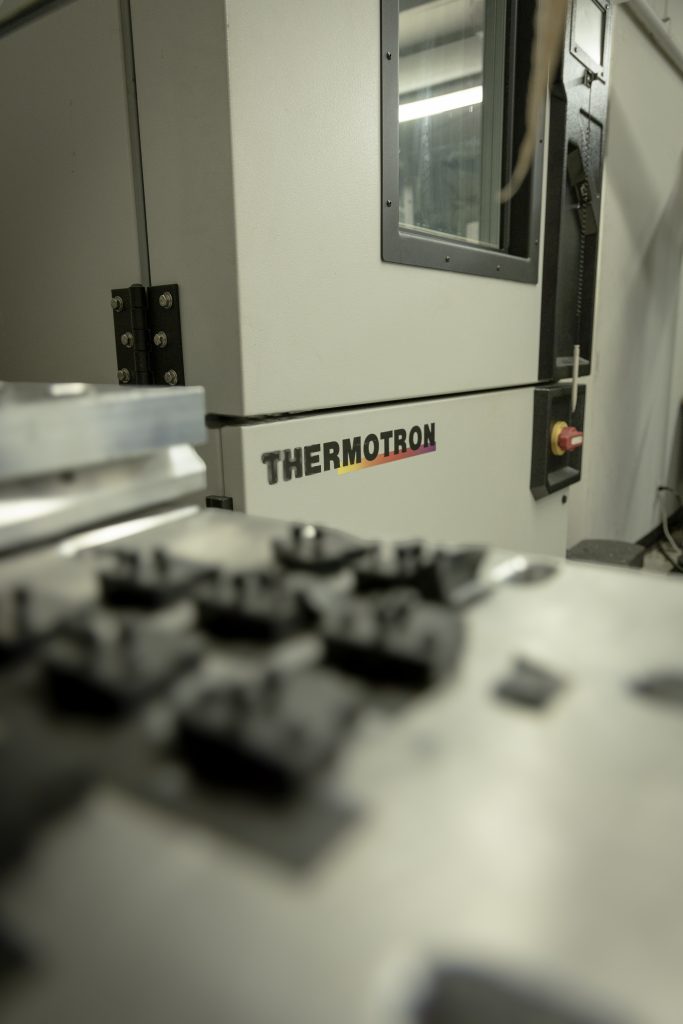
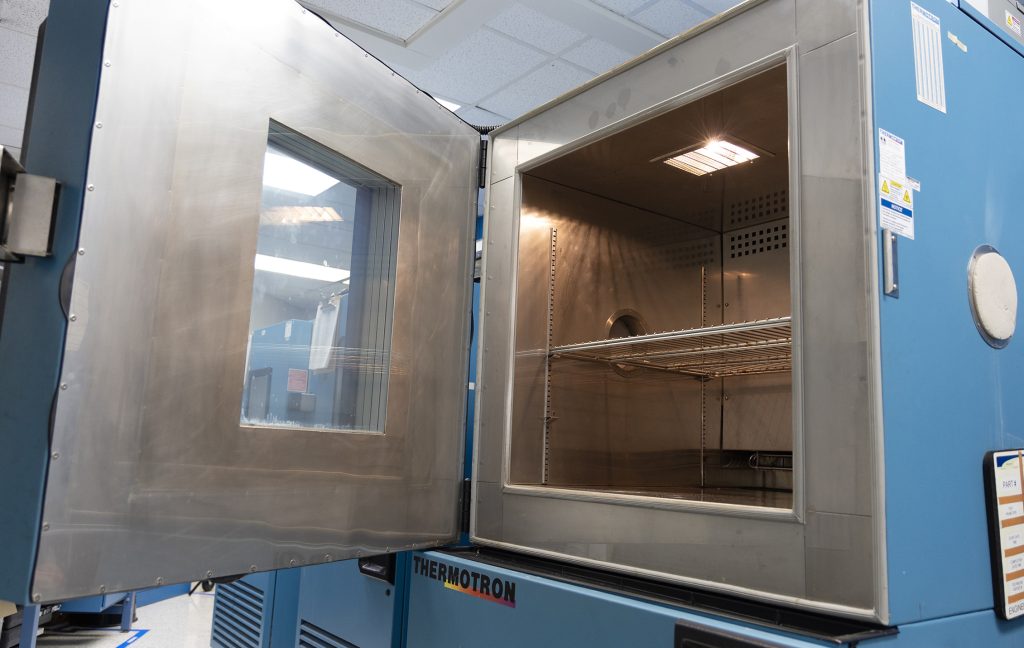
To evaluate thermal stability, Grayhill uses controlled environmental chambers that create predictable, repeatable temperature conditions.
High Temperature Testing
High temperature exposure helps identify:
- Material softening or deformation
- Thermal expansion that affects assemblies or tactile response
- Electrical drift and resistance changes
- Degradation of adhesives or coatings
- Seal performance under heat
Storage and operational tests are both considered to reflect actual use.
Low Temperature Testing
Low temperature exposure reveals:
- Changes in actuation forces or tactile feel
- Brittleness or cracking in plastics
- Reduced elasticity in seals or gaskets
- Altered electronic response times
These insights help validate both design intent and material selection.
How Humidity Testing Works
Humidity testing exposes products to elevated moisture levels through cyclic patterns that simulate natural environments. MIL-STD-810 Method 507 includes controlled humidity cycles that incorporate:
- Extended high humidity
- Condensation periods
- Drying intervals
- Temperature shifts that produce moisture loading
These conditions reveal moisture driven failure mechanisms such as corrosion, optical fogging, insulation breakdown, or warping in nonmetal materials.
Why Temperature and Humidity Testing Matter for Customers
Environmental performance affects every stage of a product life cycle. Customers rely on Grayhill components to:
- Maintain performance in extreme climates
- Resist moisture driven degradation
- Remain stable after storage and transport
- Support long term durability in outdoor or high-risk environments
- Deliver consistent performance across temperature cycles
By validating these behaviors early, Grayhill aligns design decisions, materials, and assembly processes with field expectations.

Temperature and Humidity Testing in the Larger Quality Framework
These environmental tests are one part of a broader quality system that includes APQP, supplier validation, and controlled manufacturing. A stable design and tightly managed supply chain allow environmental test data to accurately represent real performance.
After temperature and humidity testing is complete, Grayhill proceeds to related evaluations such as thermal shock, vibration, and mechanical shock to understand performance across the full range of environmental stresses.