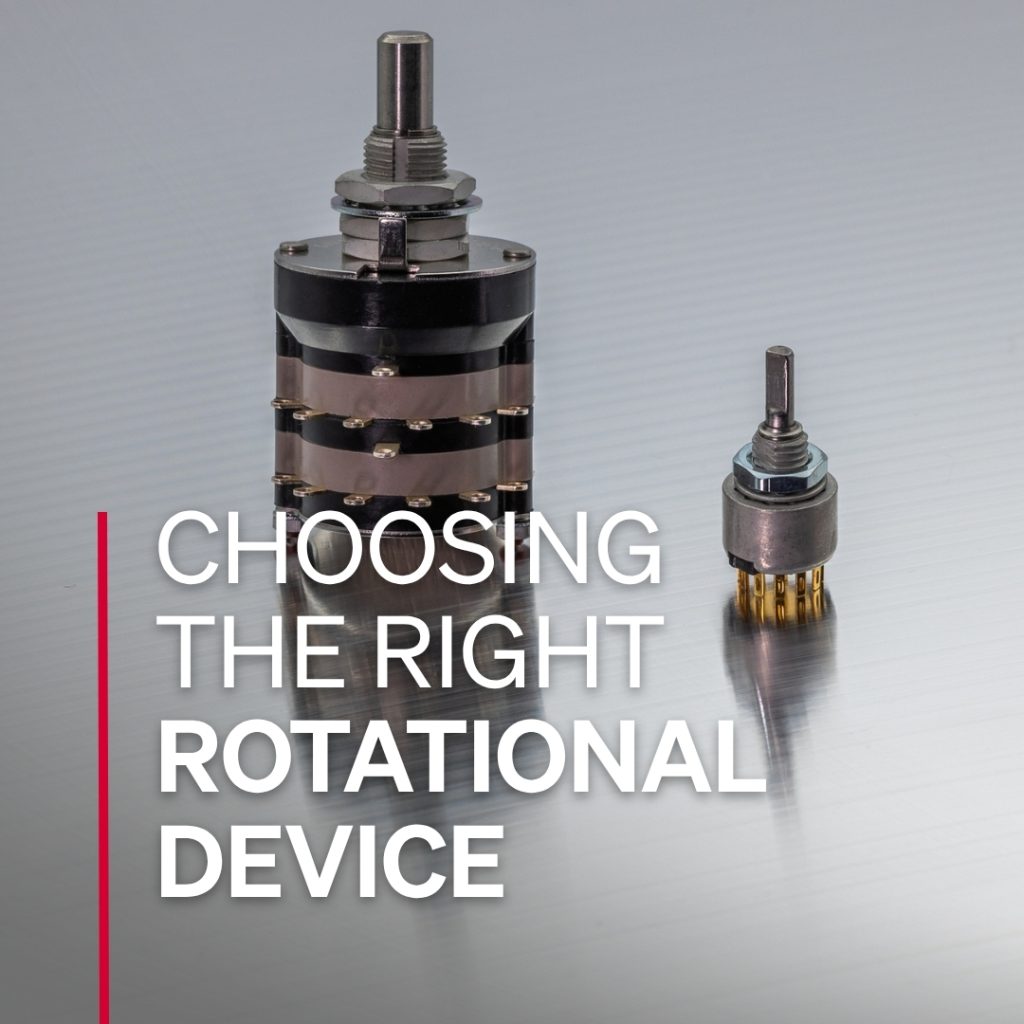













Most engineers don’t struggle because they lack options. They struggle because they start with the wrong question. When it comes to rotational controls, the real challenge isn’t choosing a product, it’s choosing the right type of device.
If you answer the five questions below, you’ll eliminate most of the uncertainty before you ever look at a datasheet.
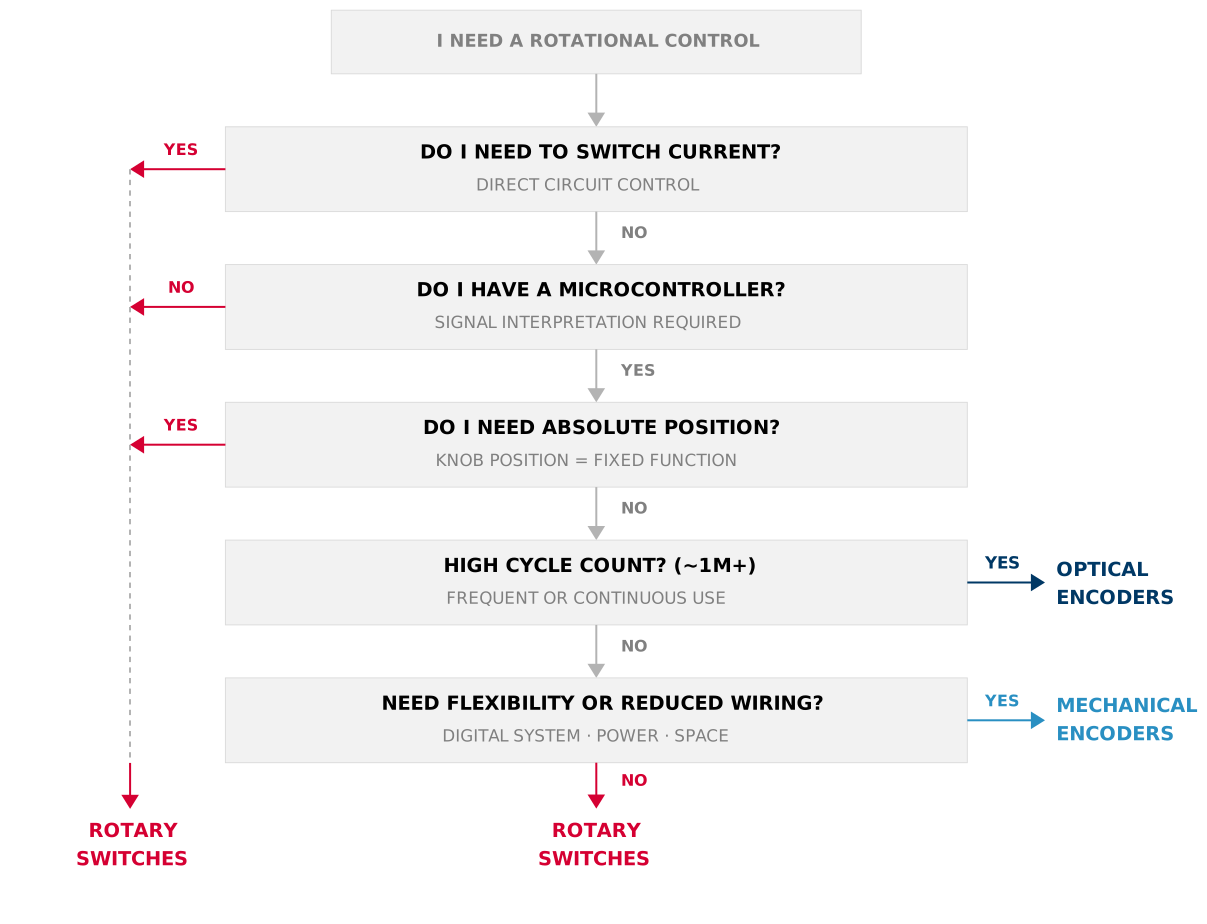
1. DO YOU NEED TO SWITCH CURRENT?
This is the most fundamental distinction.
- Yes → You need a rotary switch
- No → You’re likely looking for an encoder
Rotary switches physically move electrical current through contacts. Encoders do not. They only send signals.
If your application involves direct control of power or circuits, this decision is already made.
2. DO YOU HAVE A MICROCONTROLLER?
Encoders depend on signal interpretation.
- No microcontroller → Rotary switch
- Microcontroller present → Encoder becomes viable
Without a controller, encoded signals have no meaning.
3. DO YOU NEED ABSOLUTE POSITION?
Ask yourself:
Does the position of the knob need to match a specific function?
- Yes → Rotary switch (absolute position)
- No → Encoder (relative movement)
For example:
- A selector dial → needs absolute position
- A volume control → only needs incremental change
This distinction is often overlooked, but it’s critical.
4. HOW MANY CYCLES WILL YOUR APPLICATION SEE?
Lifecycle requirements can significantly influence your decision:
- Lower cycle applications (~25k–50k) → Mechanical solutions are often sufficient
- High-cycle applications (~1M+) → Optical encoders are typically preferred
If your interface is used constantly, lifecycle is not a secondary concern, it’s a primary one.
5. WHAT ARE YOUR SYSTEM CONSTRAINTS?
Now consider the broader system:
Power
- Low/no power available → Rotary switch
- Powered system → Encoder possible
Wiring
- Many discrete connections acceptable → Rotary switch
- Reduced wiring desired → Encoder
Environment
- Extreme conditions → Mechanical solutions often preferred
- Controlled environment → More flexibility
Space
- Limited panel depth or PCB constraints → May influence device type and configuration
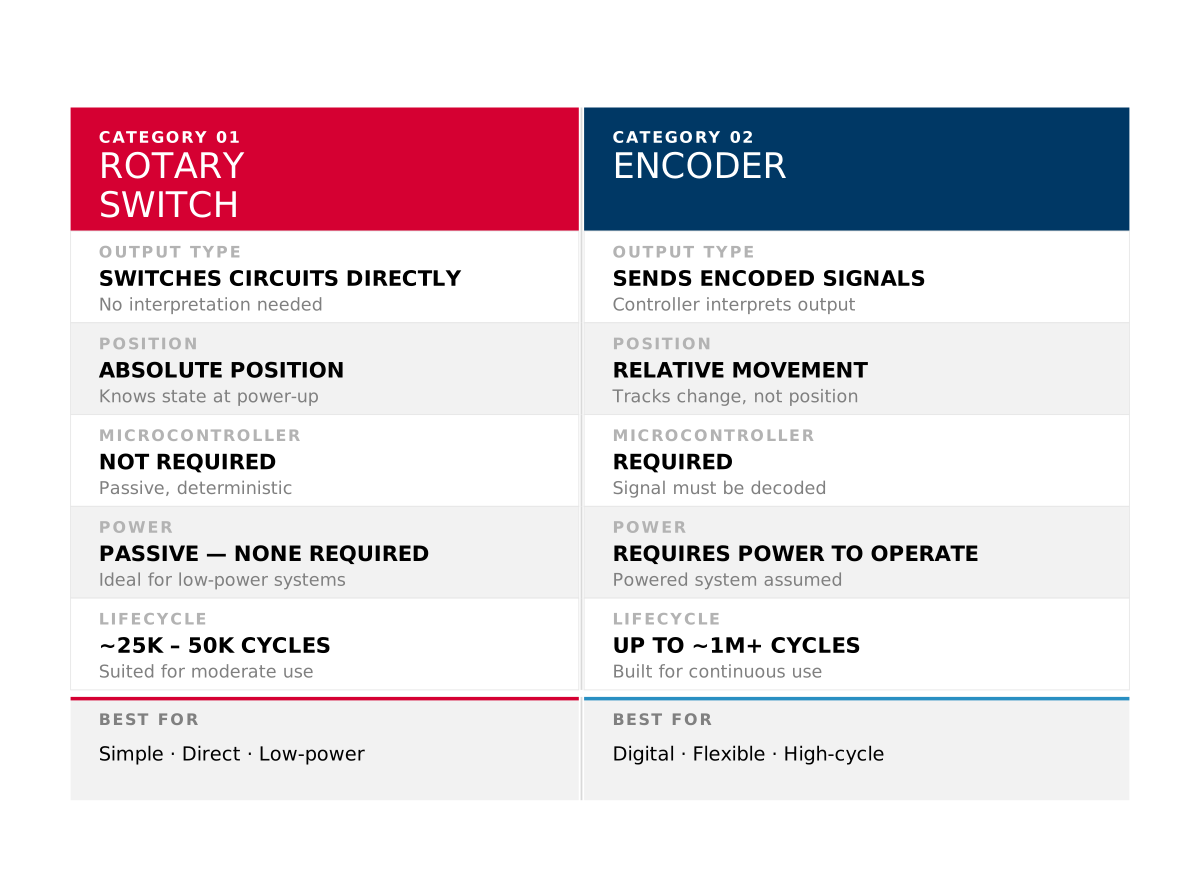
WHY THESE QUESTIONS MATTER
These five questions map directly to the core decision drivers in rotational control design:
- Output type (direct vs encoded)
- System architecture (microcontroller or not)
- User interaction (absolute vs relative)
- Lifecycle expectations
- Integration constraints
Answering them early prevents costly redesigns later.
FROM QUESTIONS TO DECISIONS
If you step back, the pattern becomes clear:
- Rotary switches are ideal for:
- Direct control
- Absolute position
- Low-power systems
- Simpler architectures
- Encoders are ideal for:
- Digital systems
- Flexible interfaces
- High-cycle applications
- Reduced wiring
READY TO TAKE THE NEXT STEP?
You now have the framework. The next step is applying it.
In our next article, we’ll introduce a decision tool that translates these answers into real product direction, helping you quickly narrow down the right solution for your application.